
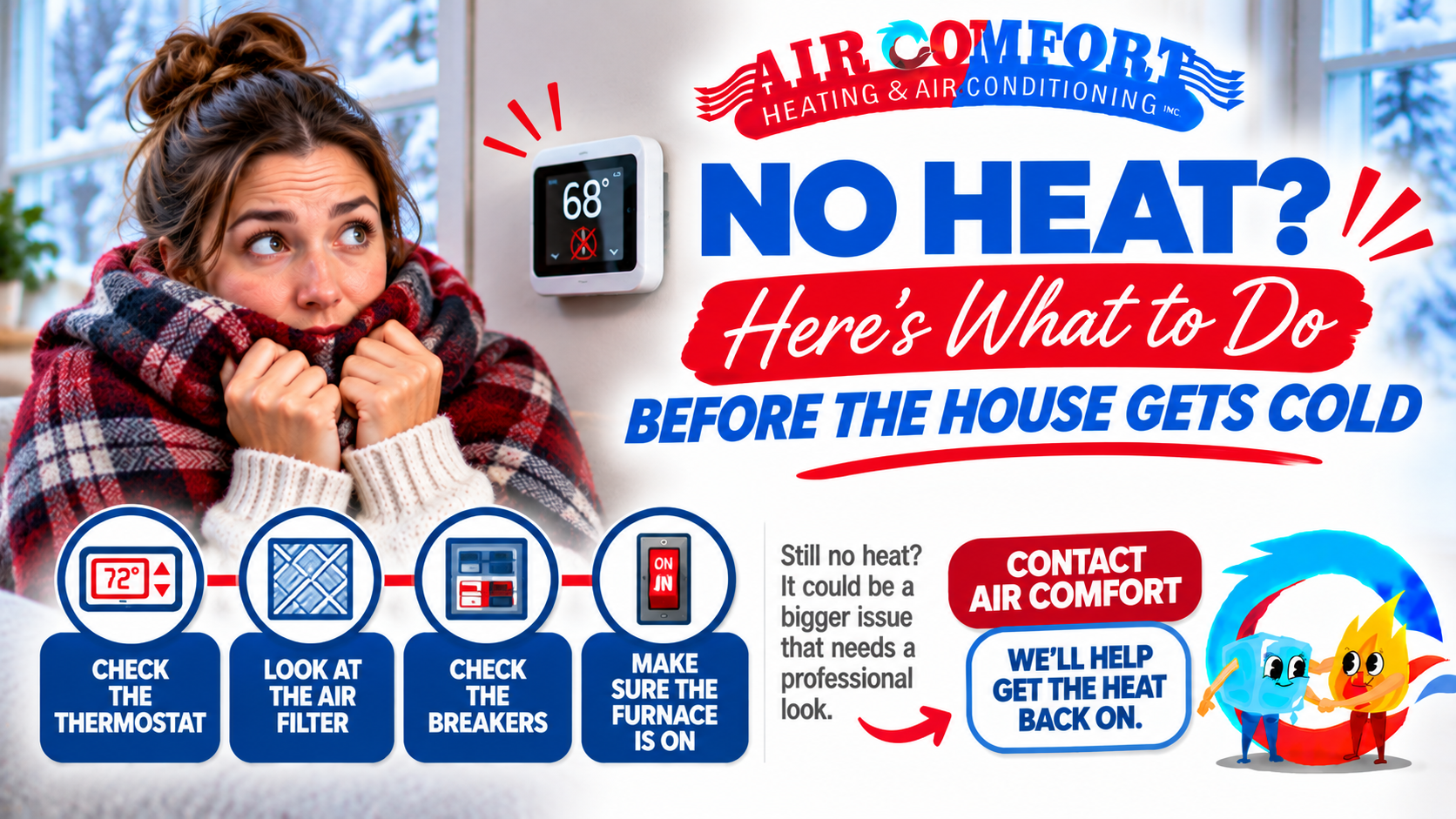
You wake up and something feels wrong.
The thermostat says 61.
The set point says 70.
The furnace is not heating.
This is when homeowners understandably start pushing every button they can find.
Instead, work through a few safe checks first.
1. Check the Thermostat
Confirm that:
- the system is set to HEAT
- the desired temperature is above the current room temperature
- the thermostat has power
- batteries are good if your thermostat uses them
2. Check Furnace Power
Look at the furnace service switch and electrical panel.
If the breaker is tripped, a single reset may show whether it was an isolated event.
If the breaker trips again, stop resetting it.
An electrical protection device that repeatedly opens is telling you something needs professional attention.
3. Check the Filter
A severely restricted filter can contribute to heating-system problems.
If it is clearly overdue, replace it with the correct size and type.
If heat does not return, continue troubleshooting the actual failure.
4. Look at Exterior Furnace Venting
If your high-efficiency furnace uses exterior intake and exhaust pipes, visually check that accessible openings are not obviously blocked by:
- snow
- ice
- leaves
- debris
Do not dismantle or modify furnace venting.
5. Listen to What the Furnace Does
When the thermostat calls for heat, does the furnace:
- do absolutely nothing?
- click repeatedly?
- start the blower?
- ignite and then shut off?
- display an error code?
Take a photo or short video when useful.
That information can help the technician significantly.
6. Call Before the Home Becomes Critically Cold
During widespread cold weather, service schedules can fill quickly.
If you already know the furnace is failing, waiting until indoor temperature becomes dangerously low does not create better options.
Protect the House Too
During severe cold, falling indoor temperatures can eventually create concerns beyond comfort, including frozen plumbing.
That is another reason a Minnesota no-heat situation can become more urgent as temperatures continue to drop.
Using a Portable Space Heater?
Follow the heater manufacturer's instructions carefully.
Keep portable heaters well separated from bedding, curtains, furniture and other combustible materials.
Plug electric space heaters directly into an appropriate wall outlet rather than extension cords or power strips, and do not leave them operating while you sleep.
Do Not Improvise With Combustion Equipment
Do not attempt to heat the house with:
- a gas oven
- a charcoal grill
- a generator
- an outdoor propane heater
Equipment not designed for indoor heating can create serious fire and carbon-monoxide hazards.
People Come Before the Furnace
If indoor conditions become unsafe—especially for young children, older adults or people with medical vulnerabilities—move to a safe heated location.
The furnace can be repaired.
People come first.
Tell Air Comfort What You Know
When calling, have this information ready if possible:
- current indoor temperature
- thermostat setting
- what the furnace does when heat is requested
- error code
- breaker status
- unusual smell or noise
- whether exterior vents appear clear
Make the safe homeowner checks. Then stop before troubleshooting becomes more dangerous than the original problem.
No heat?
Air Comfort Heating & Air Conditioning provides heating service throughout our Minnesota service area.
Frequently Asked Questions
Should I repeatedly reset a furnace that will not run?
No. If the furnace repeatedly fails or a breaker trips again, the underlying problem needs diagnosis.
Can I use a portable space heater while waiting for furnace service?
Portable electric heaters can provide supplemental heat when used exactly as directed and kept safely away from combustible materials.
When does a furnace failure become urgent?
Severe outdoor cold, rapidly falling indoor temperatures, vulnerable occupants and risk to plumbing can all increase the urgency of a no-heat situation.
