
It's Halloween.
So naturally your furnace has decided to contribute to the soundtrack.
Bang.
Squeal.
Rattle.
Grind.
Heating systems make noise.
The question is whether the sound is normal for your system—or something new.
Your Furnace Is Not Supposed to Be Silent
Normal furnace operation can include:
- airflow
- blower sound
- ignition
- control clicks
- duct expansion
What gets our attention is a dramatic change.
If the furnace has sounded one way for years and suddenly sounds completely different, tell us.
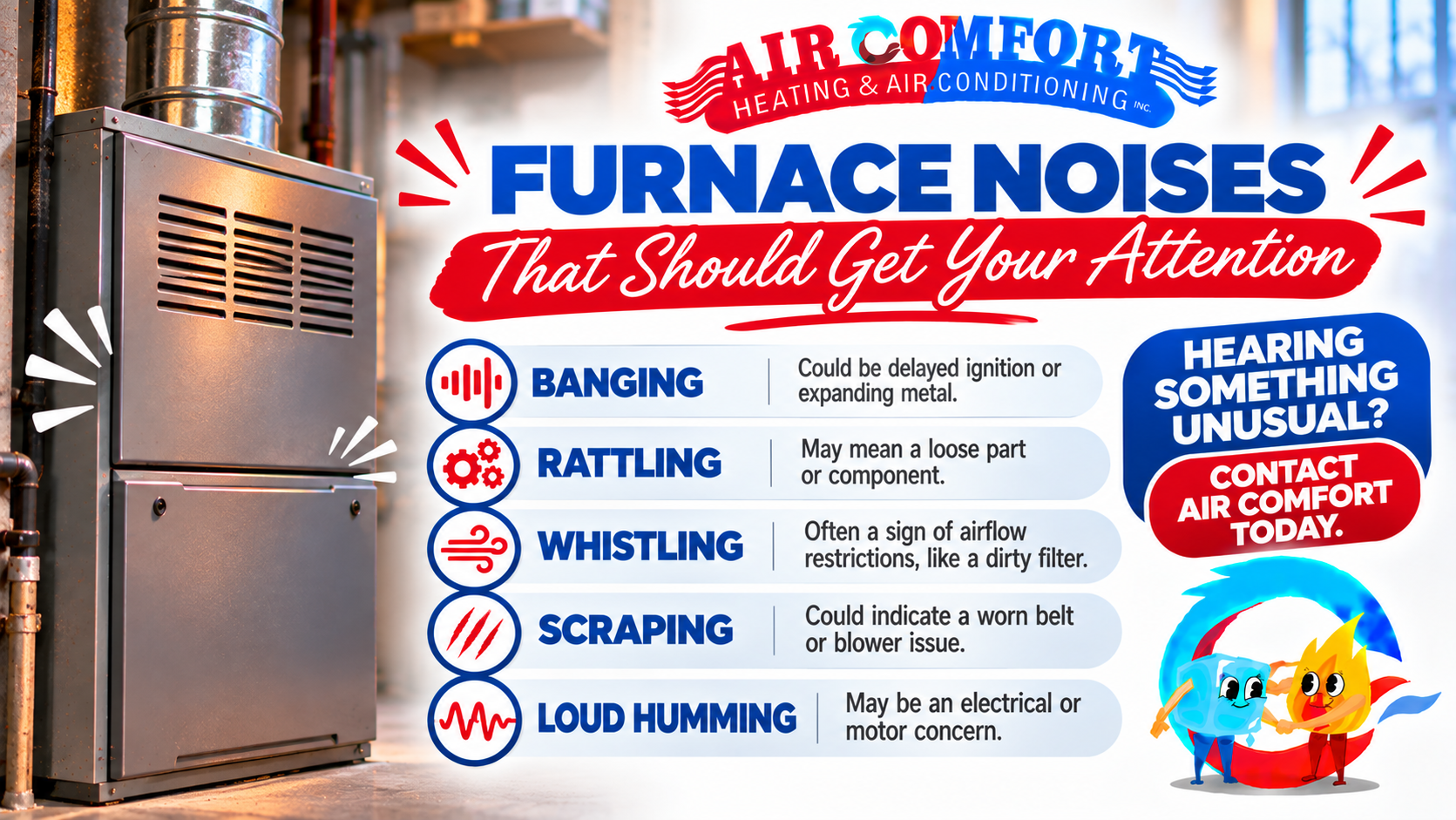
Banging at Startup
A loud bang associated with furnace ignition deserves prompt attention.
Abnormal or delayed ignition should be professionally evaluated.
Do not repeatedly cycle equipment that is producing violent ignition sounds.
Banging From the Ductwork
Not every bang comes from inside the furnace.
Sheet-metal ductwork can expand and contract as temperature and pressure change.
That can create:
- popping
- ticking
- banging
The timing and location of the noise can help distinguish duct movement from furnace operation.
Squealing
A new high-pitched squeal may involve moving components such as the blower motor or other rotating equipment.
Equipment designs vary, so the sound is a diagnostic clue—not an automatic parts list.
Grinding
Grinding is one sound we would not ignore for long.
A severe mechanical grinding noise can indicate a moving component is failing or contacting something it should not.
Stopping the equipment may help prevent additional damage until it can be inspected.
Rattling
Rattling could be as simple as a loose panel.
It could also involve:
- ductwork
- vibration
- blower components
- other mechanical parts
The source matters.
Repeated Clicking
A click can be normal.
Repeated clicking while the furnace cannot start is different.
That may indicate the startup sequence is being interrupted.
Buzzing or Humming
Motors and electrical equipment naturally create some operating hum.
A new, loud or persistent buzz deserves attention when paired with:
- burning odor
- startup failure
- breaker problems
- overheating
Whistling
Whistling often points toward airflow.
Potential contributors can include:
- restrictive filter
- register conditions
- duct pressure
- airflow restriction
If a badly loaded filter is replaced and the sound disappears, you learned something.
If the noise remains, continue investigating.
Take a Video
This is one of the easiest ways homeowners can help.
Intermittent noises have a remarkable ability to disappear five minutes before the technician arrives.
When safe, record:
- the sound
- equipment behavior
- when during the cycle it happens
That recording may be very useful during service.
Don't Wait for the Sequel
A new furnace sound may turn out to be harmless.
It may also be the first warning that a component is changing or failing.
Air Comfort can determine whether you're hearing:
normal operation, duct movement, airflow trouble, electrical trouble or a mechanical problem.
Furnace suddenly making a new noise?
Air Comfort has been helping Minnesota homeowners stay comfortable since 2002.
Frequently Asked Questions
Is it normal for a furnace to make noise?
Yes. Airflow, ignition and mechanical operation all create some sound. Sudden or severe changes deserve more attention.
Should I shut off a furnace that is grinding?
A severe new mechanical grinding noise is a reasonable reason to stop operation and have the equipment inspected.
Can a dirty filter make my furnace whistle?
A restrictive filter can affect system airflow and may contribute to unusual air noise.
