
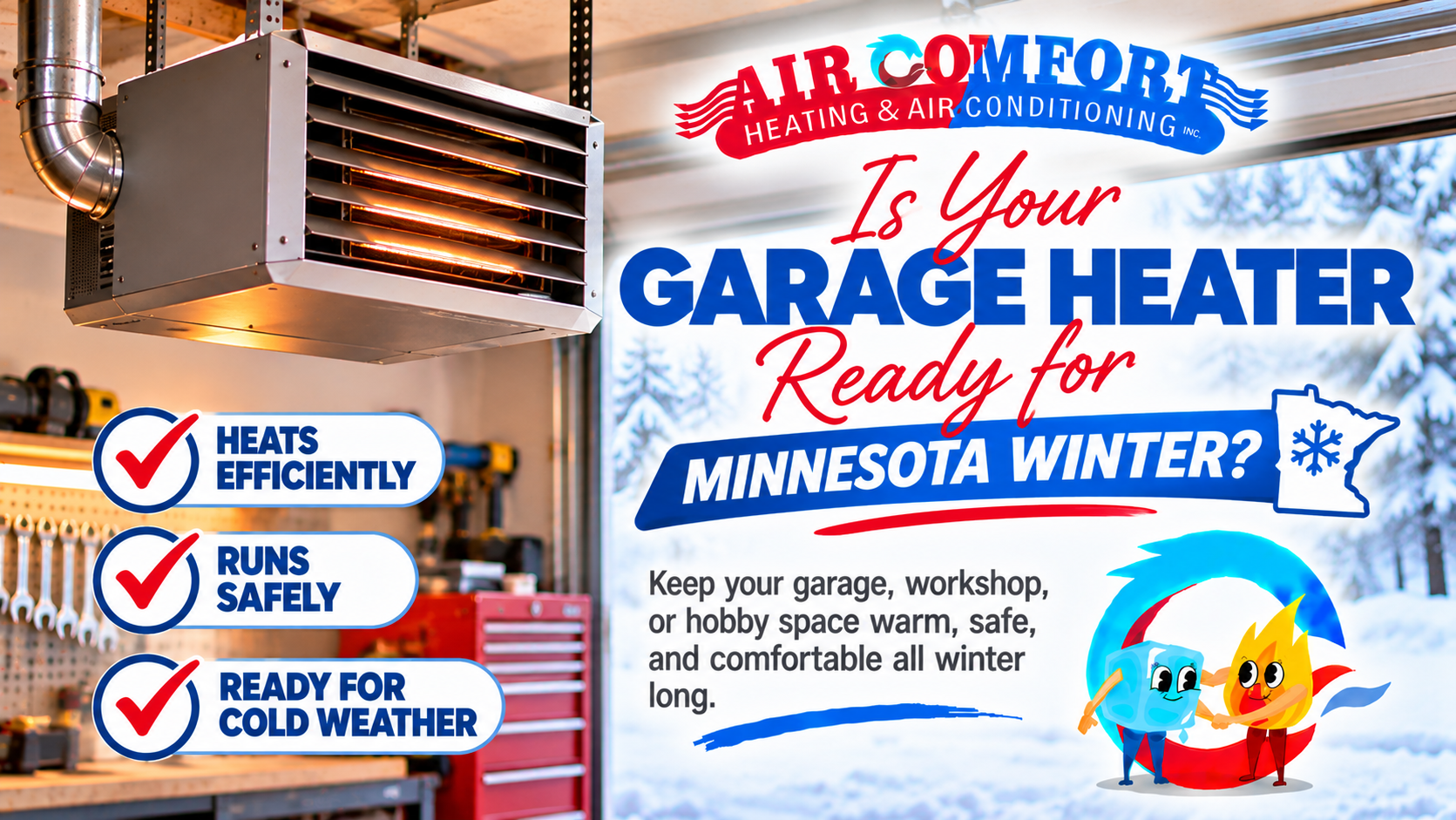
The first truly cold morning arrives.
You walk into the garage.
The truck is cold.
The tools are cold.
The floor is cold.
You turn on the garage heater.
Nothing.
October is a much better time to discover that problem than January.
Test the Heater Before You Need It
Run the garage heater before sustained winter weather arrives.
Confirm that:
- thermostat responds
- heater starts normally
- warm air is produced
- blower operates normally where applicable
- equipment shuts down correctly
- no unusual smells or noises appear
Clear the Area Around the Equipment
Garages collect things.
Boxes.
Cardboard.
Paint.
Fuel.
Cleaning products.
Seasonal decorations.
Keep combustible and flammable materials properly separated from heating equipment according to manufacturer requirements.
Look at the Venting
Fuel-burning garage heaters need a safe path for combustion gases.
Visually inspect accessible venting for obvious:
- damage
- disconnection
- corrosion
- outside obstruction
Do not modify or improvise venting.
Find the Exterior Vent Before the Snow Does
Leaves, debris, nests and eventually snow can affect exterior terminations.
October is a great time to identify where the heater vents and make sure the area is clear.
Carbon Monoxide Safety Matters in the Garage Too
Fuel-burning garage equipment deserves the same combustion-safety attention as other heating appliances.
A carbon-monoxide alarm is an important layer of protection.
It is not permission to operate heating equipment with known problems.
What if You Smell Gas?
If you smell a strong sulfur or rotten-egg odor associated with a possible natural-gas leak, stop troubleshooting.
Leave the area and follow your gas utility's emergency procedure from a safe location.
Is the Garage Itself Working Against the Heater?
If the heater runs constantly but the space barely warms, the heater may not be the only issue.
Garage comfort can also depend on:
- wall insulation
- ceiling insulation
- garage-door insulation
- air leakage
- building volume
Don't Improvise Indoor Heating
Do not substitute equipment that was never designed to heat an enclosed garage.
Grills, generators, vehicle engines and outdoor combustion heaters create serious hazards in enclosed spaces.
Check the Thermostat Location
A thermostat positioned near the overhead door, direct heater discharge or a major draft may not accurately represent the entire garage.
If temperature swings are significant, control location may be part of the comfort problem.
Make sure the garage heater works before Minnesota makes it urgent.
Air Comfort services garage heating systems throughout our service area.
Frequently Asked Questions
When should I test my garage heater?
Before sustained cold weather begins, while a repair is still an inconvenience rather than a winter emergency.
Can I store boxes directly around my garage heater?
Keep combustible and flammable materials separated from heating equipment according to the clearances required by the manufacturer.
Does a garage heater need maintenance?
Fuel-burning heating equipment and its venting should receive appropriate inspection and service to support safe, reliable operation.
