
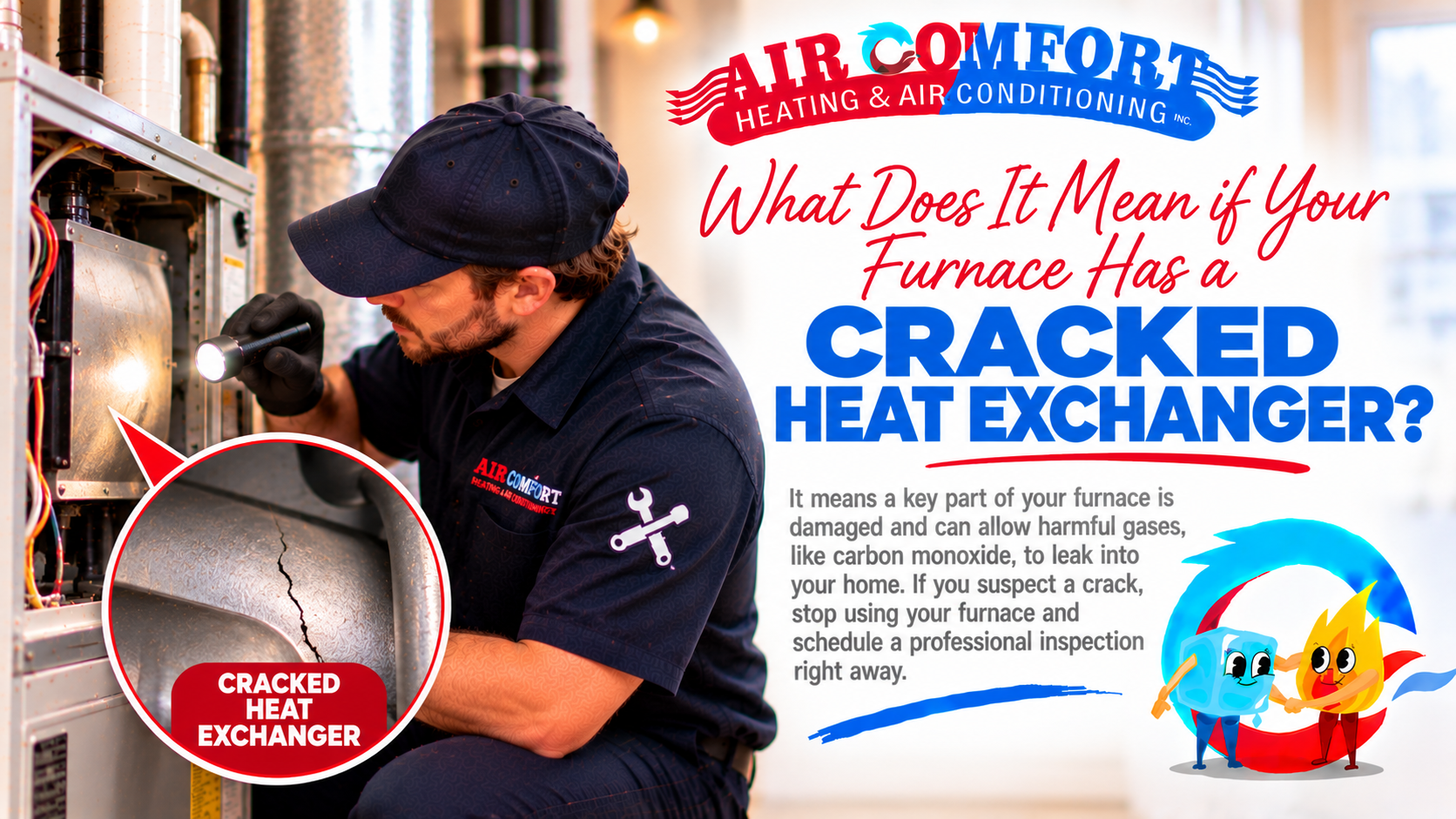
Few furnace diagnoses get a homeowner's attention faster than:
“Your heat exchanger is cracked.”
A damaged heat exchanger can be a serious heating-system concern.
It is also a diagnosis homeowners deserve to understand before making an expensive decision.
What Is a Furnace Heat Exchanger?
In a combustion furnace, the heat exchanger helps separate combustion gases from the household air being circulated through the duct system.
The burners heat the exchanger.
The blower moves household air across the outside of that heated surface.
That heated household air travels through the home while combustion gases follow their intended venting path outdoors.
Why Does Damage Matter?
A damaged heat exchanger can compromise that separation.
Exactly how significant the condition is depends on the location and severity of the damage, furnace operation, venting and combustion conditions.
This is not a furnace problem we recommend diagnosing or dismissing from an internet photo alone.
Does a Crack Automatically Mean Carbon Monoxide Is Entering the Home?
Not every discovered crack proves carbon monoxide is entering the living space at that exact moment.
But damaged combustion equipment deserves serious professional evaluation because the system is no longer in the condition in which it was designed to operate.
Can Every Heat-Exchanger Problem Be Seen Easily?
No.
Heat exchangers can be difficult to inspect because substantial portions of the component sit inside the furnace.
Depending on the equipment and concern, technicians may use:
- visual inspection
- inspection cameras
- system measurements
- combustion testing
- manufacturer procedures
Ask to Understand the Evidence
If a contractor tells you there is significant heat-exchanger damage, it is reasonable to ask:
- Where is the damage?
- Can you show me what was found?
- What testing supports the diagnosis?
- What does the manufacturer recommend?
- Is the furnace safe to operate?
A major recommendation should become clearer when you ask questions.
Can a Heat Exchanger Be Replaced?
Depending on the furnace, parts availability and warranty, replacement may be possible.
However, heat-exchanger repair can involve substantial labor.
On older equipment, homeowners may need to compare:
major furnace repair
versus
complete furnace replacement.
Check the Warranty
Before assuming the entire repair is out-of-pocket, identify:
- furnace model number
- serial number
- manufacturer warranty status
- whether previous registration affects coverage
- whether labor is included or separate
Parts coverage and labor coverage are not always the same thing.
When Does a Second Opinion Make Sense?
If the furnace has been shut down over a significant safety-related diagnosis and the recommended repair or replacement is substantial, an independent second professional evaluation can be reasonable.
The objective is not to shop around until somebody says:
“Just ignore it.”
The objective is to confirm the condition and understand the available paths.
Make Sure Carbon Monoxide Alarms Work
Homes with combustion appliances should have functioning carbon-monoxide alarms installed and maintained according to applicable requirements and manufacturer instructions.
Alarms are an important layer of protection.
They do not replace properly operating heating equipment.
You Deserve More Than a Scary Phrase
If Air Comfort identifies a significant heat-exchanger concern, we want you to understand:
- what we found
- why it matters
- whether the equipment should operate
- what repair options exist
- how replacement compares
Have questions about a furnace diagnosis?
Air Comfort can help you understand the condition of the equipment and the options in front of you.
Frequently Asked Questions
What does a furnace heat exchanger do?
It transfers heat from the combustion process to household air while helping maintain separation between combustion gases and the air distributed through the home.
Does a cracked heat exchanger automatically mean I need a new furnace?
Not automatically. The confirmed condition, equipment age, repairability, warranty and economics should all be considered.
Can I get a second opinion on a heat-exchanger diagnosis?
Yes. For a major safety-related diagnosis resulting in an expensive repair or replacement recommendation, another qualified professional evaluation can be reasonable.
